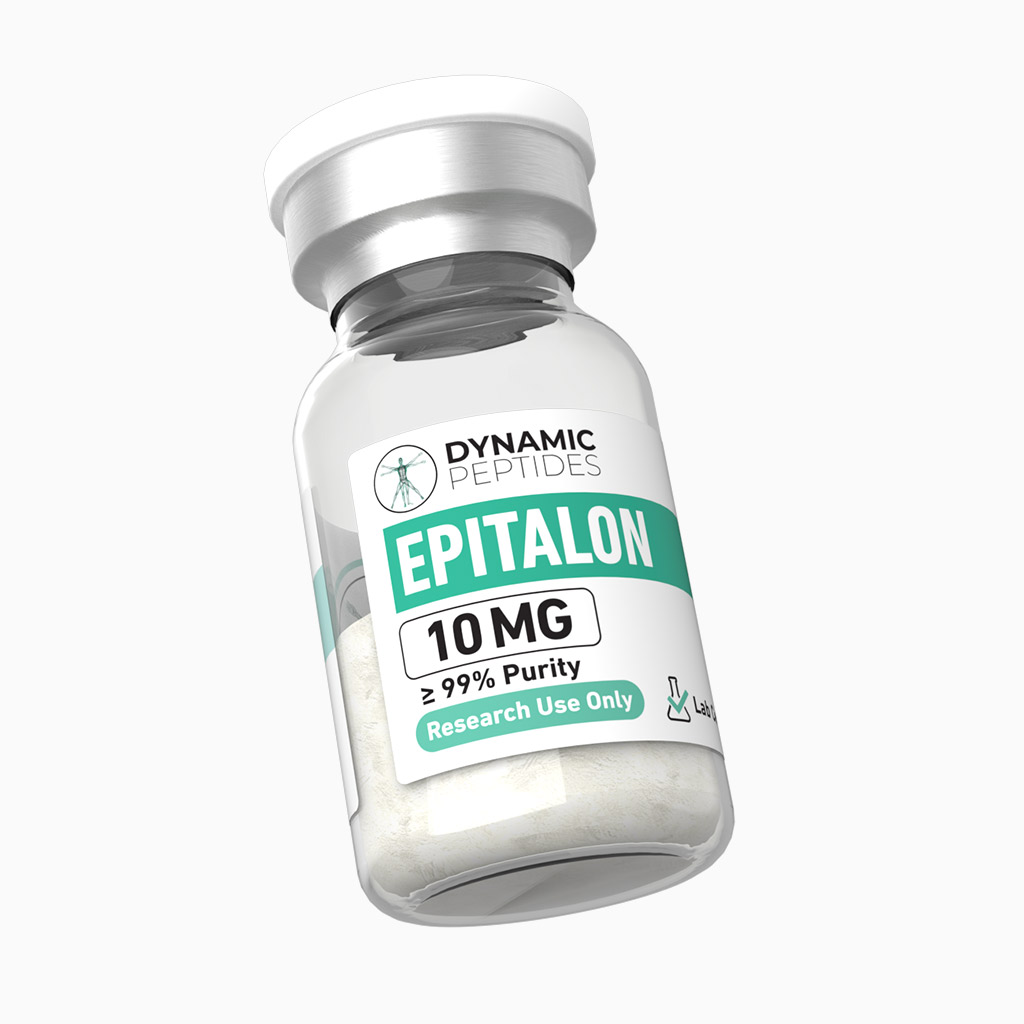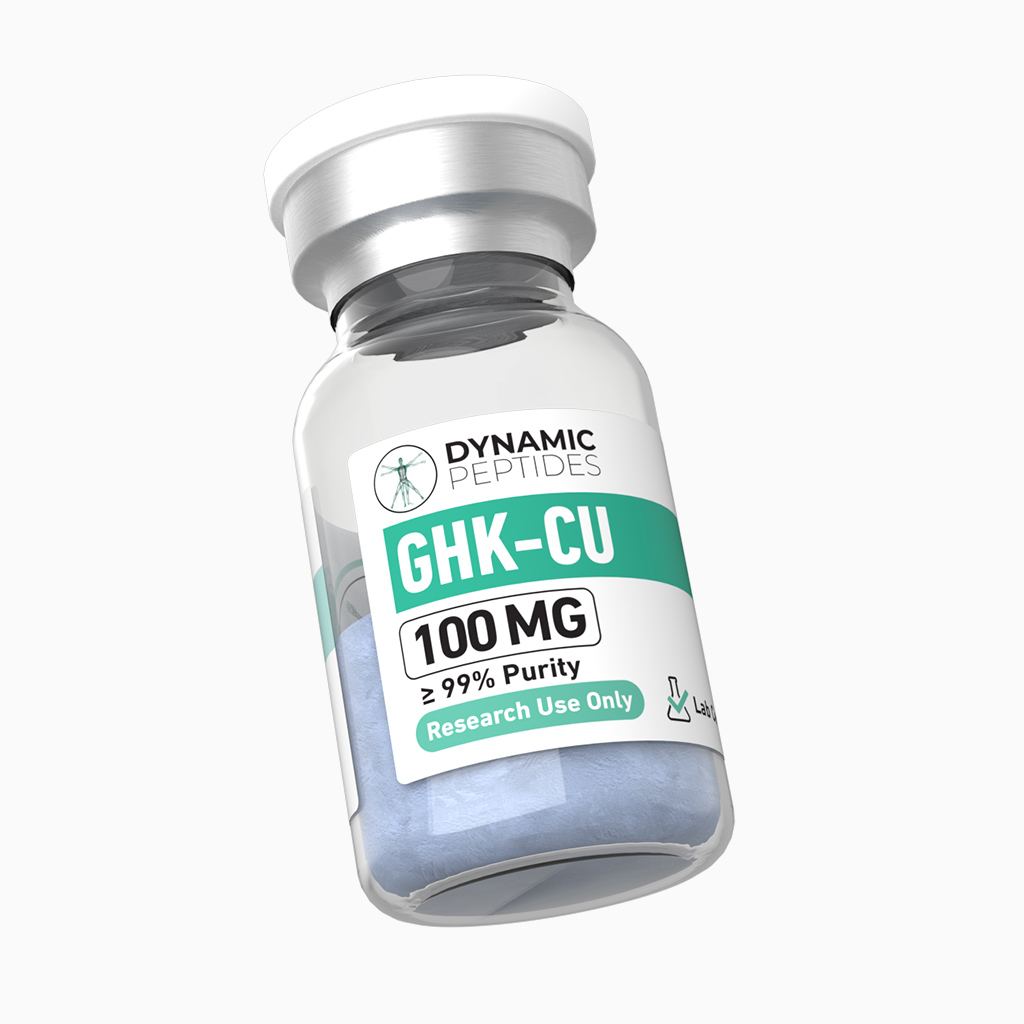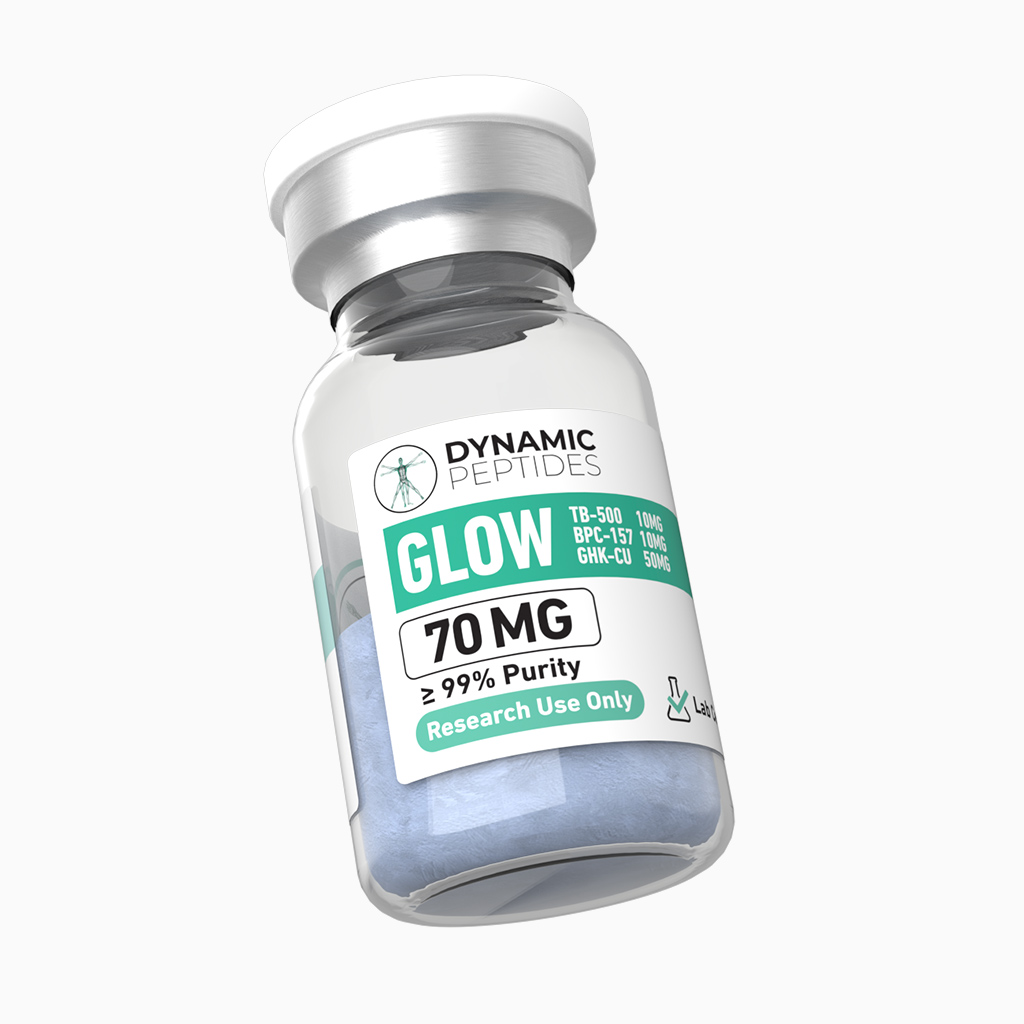


Almost every peptide supplier on the internet claims their products are “lab tested.” It is one of the most repeated phrases in the category, and on its own, it is one of the least useful. Without knowing what was tested, by whom, and against what standards, the phrase carries no real information
This article walks through what third-party lab testing actually means, what specifically gets verified before a research-grade peptide reaches a customer, and how Dynamic Peptides handles each step of that process.
Why “Lab Tested” Means Almost Nothing on Its Own
The phrase covers a huge range of practices. A supplier might mean the manufacturer ran an internal check at the production stage. They might mean a single test on a single batch years ago. They might mean nothing at all, and no one has ever asked them to substantiate the claim.
The differences are significant. A peptide tested once at the factory and shipped without further verification can still be mislabeled, underdosed, or degraded in transit. None of those problems are visible to the customer until something goes wrong, and by then the vial has already been opened, reconstituted, and used.
The only useful way to cut through the noise is to ask three specific questions. What lab performed the analysis. Whether the lab is independent of the supplier. Whether the documentation is available on request. Suppliers who can answer all three clearly are operating in a fundamentally different category from those who cannot.
What Third-Party Actually Means
The “third-party” part of “third-party lab tested” is the part that does the work. It means the lab performing the analysis is independent of the supplier and independent of the manufacturer. The lab has no commercial incentive to deliver a clean result, and the supplier has no influence over what the report shows.
That separation is the whole point. Internal testing, even when done competently, has a structural conflict of interest. The party producing the compound is also the party verifying it. Third-party testing removes that conflict by inserting a neutral analytical lab between manufacturing and the customer.
At Dynamic Peptides, every batch is sent to an independent analytical lab for verification before it enters inventory. Test results, documented as Certificates of Analysis, are kept on file and made available to customers on request.
What Gets Tested
A complete peptide analysis is not a single check. It is a set of distinct measurements, each one answering a different question about the product:
- Identity. Mass spectrometry confirms that the compound in the vial actually matches the peptide on the label. Identity testing catches the most fundamental error in this category, which is a vial labeled as one peptide containing something else entirely.
- Purity. High-performance liquid chromatography measures what percentage of the contents is the target peptide versus other compounds. Research-grade material should sit at 98 percent purity or higher, with the remaining percentage characterized rather than unknown.
- Concentration. Verifying that a 5mg vial actually contains 5mg of active peptide. Underdosing is a common quality failure in the broader market, and it is invisible without testing.
- Related impurities. Identifying any synthesis byproducts, fragments, or degraded variants that may be present alongside the target peptide.
- Endotoxin and bioburden screening. Where applicable, confirming the product is free from bacterial contaminants that compromise stability.
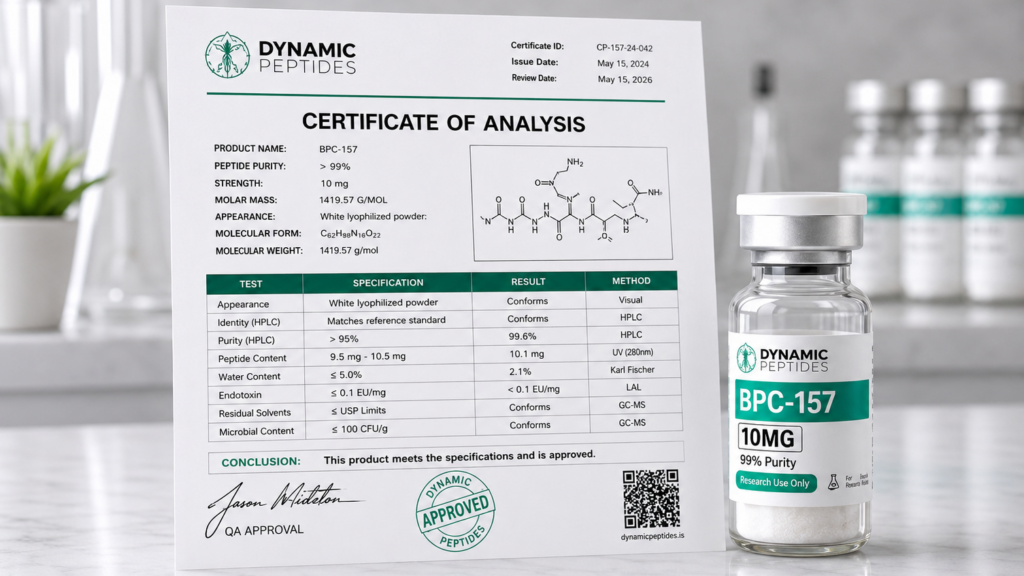
A Certificate of Analysis combines these measurements into a single document tied to a specific batch identifier. That batch identifier follows the product from inventory through to the customer’s order.
The Full Process, From Sourcing to Shipment
Third-party testing is the most visible part of quality control, but it is one stage in a longer chain. The integrity of a finished product depends on every prior step holding up.
Sourcing comes first. The peptide is synthesized by a manufacturer working to established standards for purity, scale, and consistency. Manufacturers that cut corners at the synthesis stage produce material that no amount of downstream testing can repair.
After synthesis, every batch is sent to the independent analytical lab. Once results come back and meet specification, the product is logged, labeled with its batch identifier, and added to inventory. Batches that fall short are rejected before they ever reach a customer order.
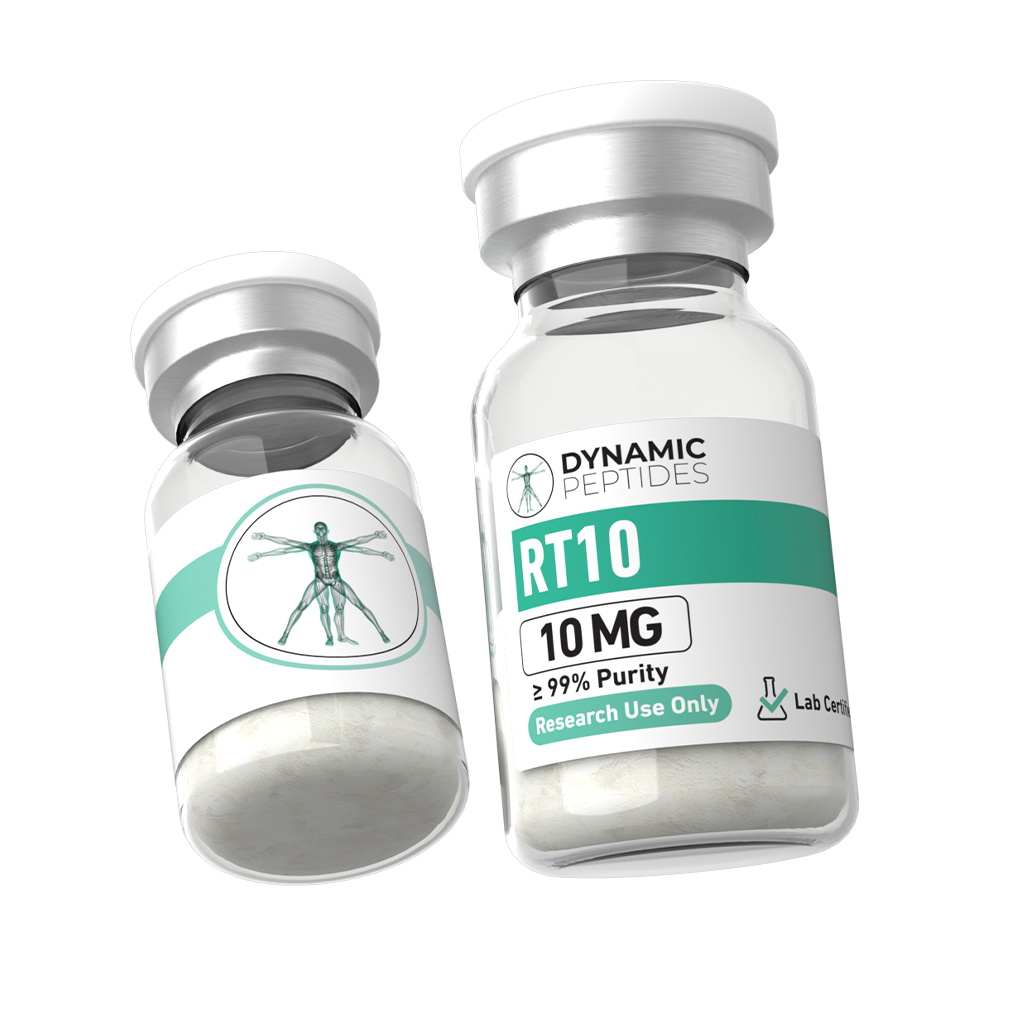
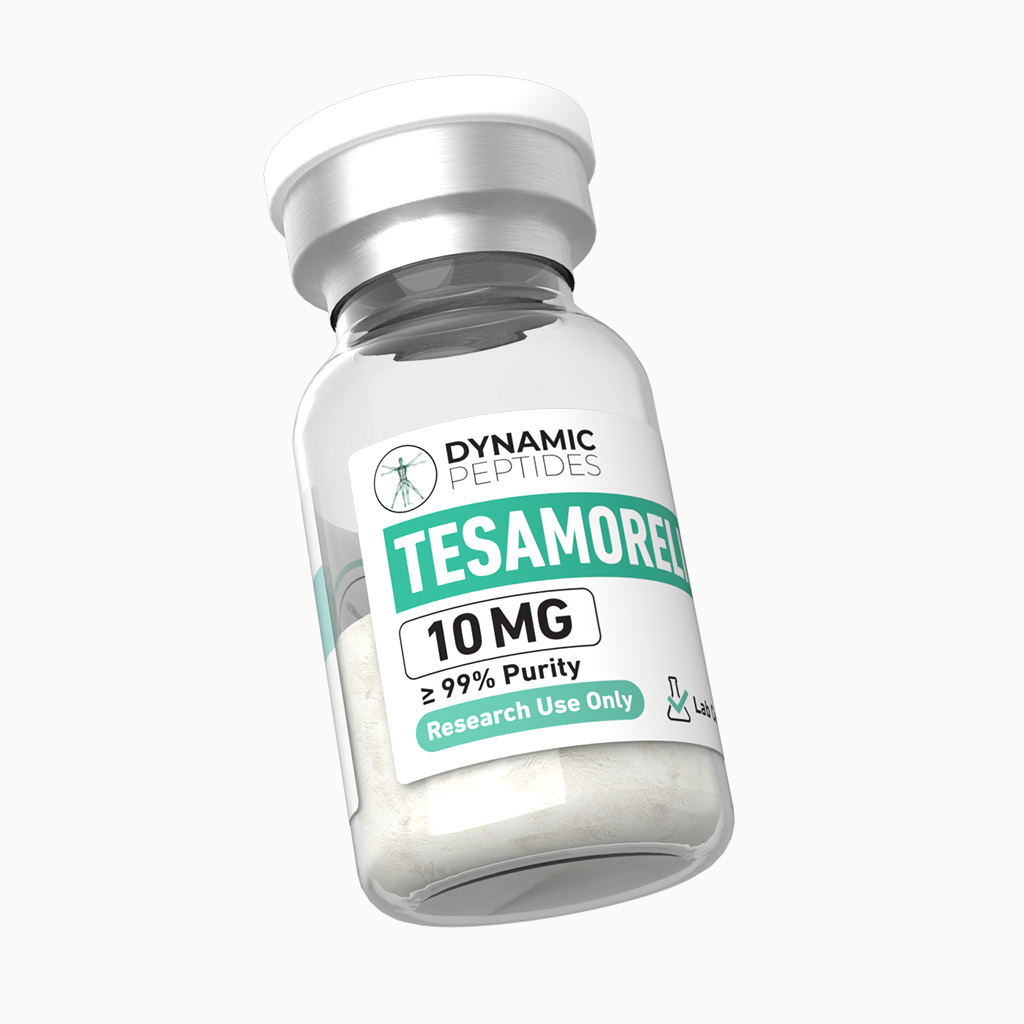
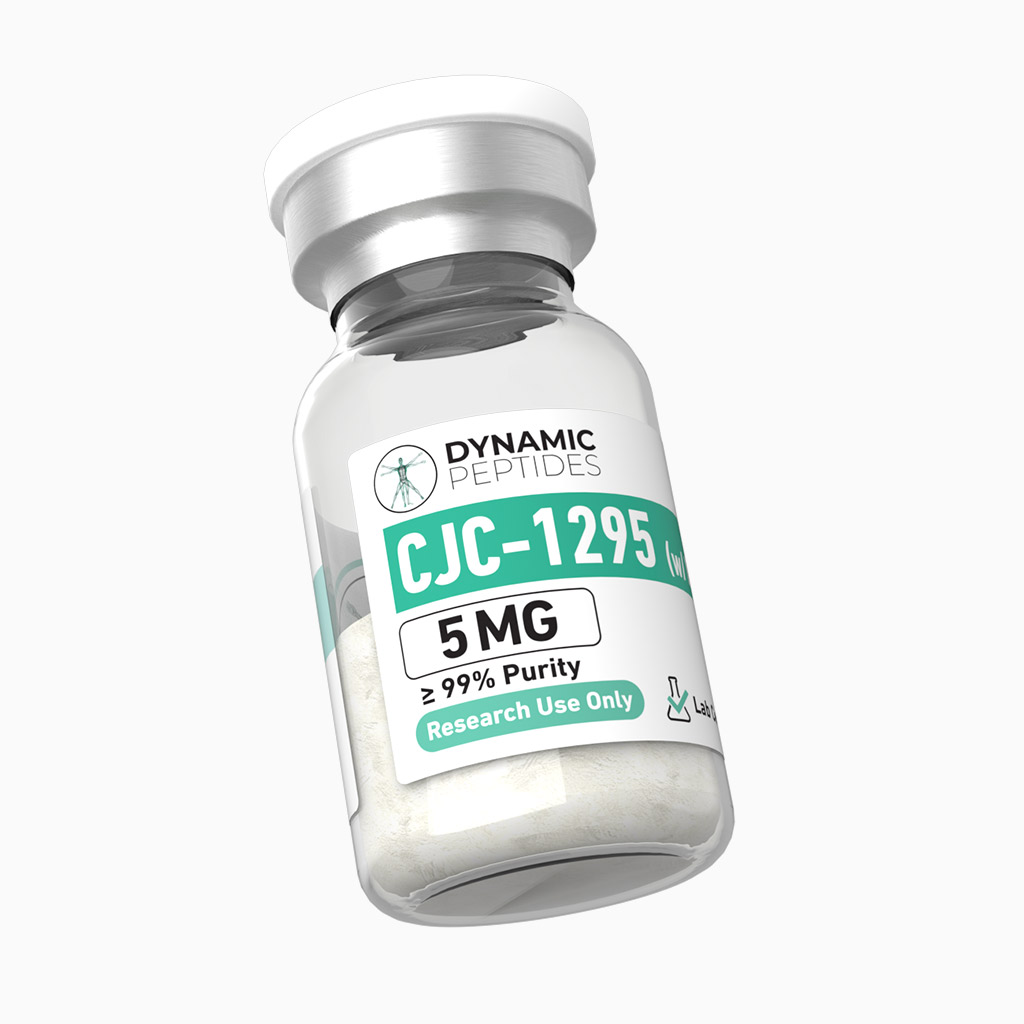
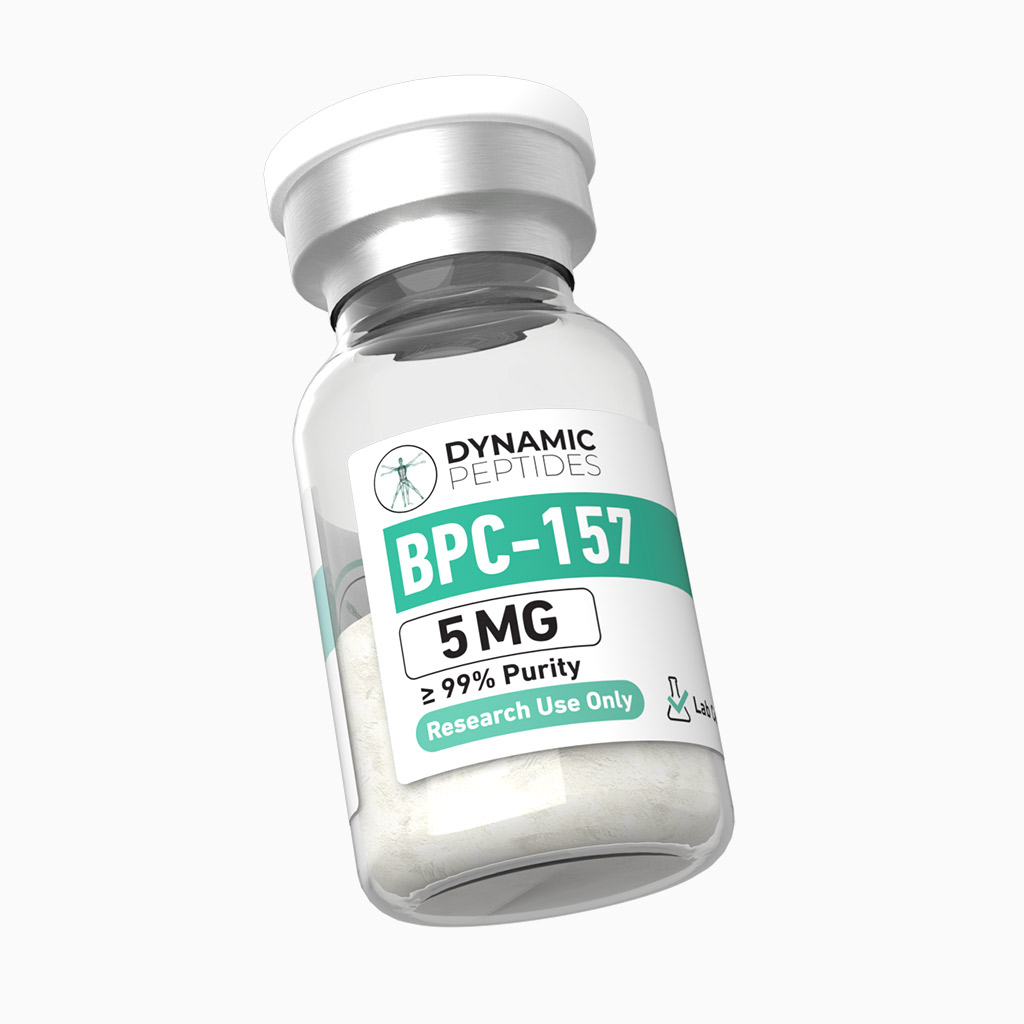
Packaging follows. Vials are packed for stability and shipped in discreet packaging without external markings that identify the contents. That practice is standard for the research compound category and applies across the full Dynamic Peptides catalog, from recovery compounds like BPC-157 through to research peptides in the anti-aging and aesthetics categories.
The reason the chain matters is that any single link can break the product. A clean Certificate of Analysis on a peptide that was then mishandled in shipping or stored incorrectly is no longer a clean product. Quality is the full process, not one stage of it.
Why It Matters in the Canadian Market
The Canadian peptide market is not uniform. There are established suppliers operating under the research-use framework with documented quality control, and there are offshore vendors selling unlabeled vials at prices that do not reflect the actual cost of testing the product.
The difference is invisible from a product photo. A grey-market vial and a properly verified vial can look identical on a website. The difference shows up in the documentation behind the product, in the supplier’s willingness to share lab reports, and in the consistency of what actually arrives across multiple orders over time.
For Canadian buyers, the practical implication is straightforward. Ask suppliers for their lab reports. Ask which lab performed the testing. If the answers are evasive or the documentation does not exist, treat that as meaningful information. Customers ordering through Dynamic Peptides can request the relevant Certificate of Analysis through the Contact page at any time.
For new buyers building out their setup, the same principle applies to handling and reconstitution. Tools like the Peptide Mixing Calculator and proper accessories carry that quality through to the actual use of the product. A properly verified vial mishandled at home does not perform any better than a poorly tested one.
A Final Note
Quality control in peptides is not a marketing line. It is a defined set of standards, applied consistently across every batch, that determine whether the compound in a vial matches what is on the label. Third-party testing is the most reliable mechanism this category has for verifying that match, and it is the difference between suppliers operating in good faith and those who are not. The Dynamic Peptides FAQ covers most of the common follow-up questions on sourcing and order handling.
All products sold by Dynamic Peptides are research-grade compounds, supplied for laboratory and research purposes. They are not approved by Health Canada for therapeutic use, and individual responses to any biologically active compound vary. Anyone considering peptides as part of a personal protocol should consult a qualified healthcare professional, particularly where existing medical conditions or other medications are involved.